English 302-N14
February 19, 2009 George Mason University Fairfax, VA
A constant need for news
By Heather Gioia
Student Writer
FAIRFAX, Va.-Despite the downfall of print papers college journalism programs continue to strive. Keeping up with the changing times is not an easy task for colleges, yet they continue to find a way.
“Since 2000, under-graduate and graduate enrollments in the nation’s more than four hundred journalism programs have been growing at a healthy rate,” said Jarreet Reshaw, writer for Colombia Journalism Review, in “Glass Half Full” stating how despite the “uncertainly about the future of newspapers” students continue to study in the field. Part of the reason Renshaw says is the fact that the traditional papers are spanning to the internet as new online journalistic options continue to arise (Reshaw).
Explaining how new focused areas of study continue to attract students to the field of journalism, Krein and Weir, writers for Journal of Sports Media, said that the “consumer demand for sports media has never been stronger, yet sports media studies have long been a low priority in traditional journalism programs” (Krein).
As times change schools are doing their best to keep up with the change in the growing demand for educations that provide job opportunities post graduation.
Prepared for the changing times George Mason University not only offers students Interpersonal/Organizational Communication (comm.), Journalism, Media Production and Criticism, Persuasive and Political Comm. and Public Relations concentrations under the comm. major but also a “create your own” bachelors degree.
Mason’s Individualized Concentration allows students, with an adviser and associate chair approval, to create their own degree from a mixed selection of comm. courses (Individualized).
The comm. program at Mason has yet to fall short of success. Graduates from 1997 to 2007 have found themselves careers within the communication industry. Brian Van De Graaff, 1997 graduate, has made his way to WJLA Washington, D.C., ABC-TV and WTOP Washington Radio News. 2002 graduate Heather Westorm became director of Ballpark Enterprises for the Washington Nationals and 2007 graduate Patrick Delaney has gone on to design and implement national multi-market radio promotions for ZComm clients (“Meet”).
Mason not only provides students with an amazing education, but also provides opportunities for success outside of the classroom. Both Broadside and VoxlPop allow aspiring journalism students to obtain published pieces of work, or clips, providing a creditable start to a portfolio.
The Society of Professional Journalist (SPJ) is the nation’s most broad-based journalism organization with both professional and student chapters. Providing opportunities to their student members such as internships and scholarships, SPJ allows their members to embrace numerous opportunities . Mason is one of five universities in Va. to offer a student chapter of SPJ (Society). Mason’s chapter of SPJ stays active and provides students with opportunities to meet established journalist such as Steven Taylor, previous White House Correspondent.

The proximity of Mason to Washington, D.C. allows communication students endless opportunities. Not only are there numerous publications and media outlets in the area, but being approximately 30 minutes away from the nations capital allows students easy access to several events. As well with the increased look towards the internet as the future, students find endless opportunities for future success.
Fully embracing the change in times Robert Lewis is the editor of Music-Reviewer.com an online publication that has literally no face-to-face time between editor and writers; Lewis works with college students in the fields of journalism and English providing an internship feasible from anywhere.
“Email made it possible to stay in touch with people from all over the country keeping communications up-to-the-minute when needed,” said Lewis. “Between my computers at home and my iPhone on the road, I’m pretty well connected wherever I go.”
 Music-Reviewer.com began in 1996 under a different name, Access to the Music Zone, landing its self ahead of the times. With over ten years and several thousand reviews under their belt, Lewis feels that Music-Reviewer.com has established themselves and found their place in an online medium where others are still stumbling to find their footing (Lewis).
According to Dodd and Tipton of Newspaper Research Journal studies have shown that over the years journalism has been moving up the popularity list of careers. While it has remained ranked third in terms of usefulness, in the area of prestige and concentrated works, “journalism replaced medicine as the most interesting” (Dodd).
Future careers do not only consist of the typical Washington Post reporter, but also a combination of all the communication fields of study that students will spend their time before graduation studying.
In 2003 David Isay, a radio documentary producer founded StoryCorps. StoryCorps preserves people’s everyday stories so that, as Isay puts it, people will know that “they matter and they won’t be forgotten” (Butler). StoryCorps broadcast on National Public Radio (NPR) every morning and allows everyone to record their own portion of history. Each recording is not only shared, but also preserved at the Library of Congress. StoryCorps is an online site that not only allows students a place to have their voice heard and story told, but also a job in the future (StoryCorps).
Mark Ethridge III, former editor of The Charlotte Observer and current editor of Carolina Parenting, Inc., said it best at the Turpin Lecture at Mass Comm. Week at Virginia Commonwealth University in Richmond, Va. “There is always a need for reporters,” said Ethridge. “The delivery system changes from trees and trucks to the internet, but the content need is the same” (Ethridge).
Works Cited
Butler, Kiera. “OTHER VOICES.” Columbia Journalism Review 45.2 (July 2006): 28-32. Communication & Mass Media Complete. EBSCO. [Library name], [City], [State abbreviation]. 5 Feb. 2009 .
Dodd, J.E., and L. Tipton. “Shifting Views of High School Students about Journalism Careers.” Newspaper Research Journal 13/14.4/1 (1992;1993): 111-9 Communication Abstracts. CSA. 7 Feb. 2009 .
Ethridge III, Mark. “Turpin Lecture in News Management.” Mass Comm Week. Virginia Commonwealth University, Richmond. 08 Oct. 2008.
Individualized Concentration. University Catalog: 2008-09, 2008. George Mason University. 5 Feb 2009 .
Krein, M., and T. Weir. “If You Build it, they Will Come: Developing a sports Media Major.” Journal of Sports Media 3.1 (2008): 77-82. Communication Abstracts. CSA. 7 Feb 2009 .
Lewis, Robert. “School Project.” E-Mail interview. 07 Feb. 2009.
“Meet an Alum.” College of Humanities and Social Sciences. George Mason University. 7 Feb. 2009 .
Renshaw, Jarrett. “Glass Half Full.” Columbia Journalism Review 46.3 (Sep. 2007): 12-12. Communication & Mass Media Complete. EBSCO. [Library name], [City], [State abbreviation]. 5 Feb. 2009 .
Society of Professional Journalist. Society of Professional Journalist. 18 Feb. 2009 .
“StoryCorps.” StoryCorps. StoryCorps. 7 Feb. 2009 .

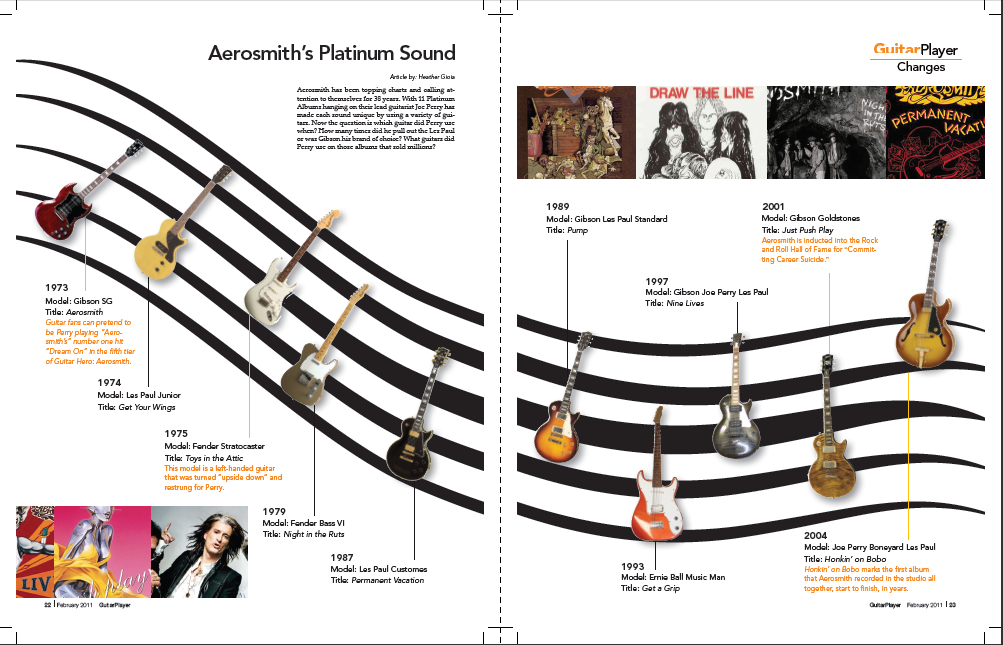


 Heather Gioia's Clips


